Join The Colorblind Community !
Join The Colorblind Community !

Click me!
Click me!
Share experiences with eachother! You're not alone!
Share experiences with eachother! You're not alone!
Join The Colorblind Community !
Click me!
Share experiences with eachother! You're not alone!
Join The Colorblind Community !
Click me!
Share experiences with eachother! You're not alone!
Join The Colorblind Community !
Click me!
Share experiences with eachother! You're not alone!
Join The Colorblind Community !
Click me!
Share experiences with eachother! You're not alone!
Optical Illusions
Optical Illusions
Optical Illusions
Optical Illusions
Optical Illusions

In both pairs, the inner squares are the same color, but look different because of the background around them.
Our eyes see colors relative to their surroundings, so the same color can appear lighter or darker depending on context. This shows how our perception of color is influenced by what’s around it. The inner color itself doesn’t change, only how we see it.
In both pairs, the inner squares are the same color, but look different because of the background around them.
Our eyes see colors relative to their surroundings, so the same color can appear lighter or darker depending on context. This shows how our perception of color is influenced by what’s around it. The inner color itself doesn’t change, only how we see it.
In both pairs, the inner squares are the same color, but look different because of the background around them.
Our eyes see colors relative to their surroundings, so the same color can appear lighter or darker depending on context. This shows how our perception of color is influenced by what’s around it. The inner color itself doesn’t change, only how we see it.
In both pairs, the inner squares are the same color, but look different because of the background around them.
Our eyes see colors relative to their surroundings, so the same color can appear lighter or darker depending on context. This shows how our perception of color is influenced by what’s around it. The inner color itself doesn’t change, only how we see it.
In both pairs, the inner squares are the same color, but look different because of the background around them.
Our eyes see colors relative to their surroundings, so the same color can appear lighter or darker depending on context. This shows how our perception of color is influenced by what’s around it. The inner color itself doesn’t change, only how we see it.
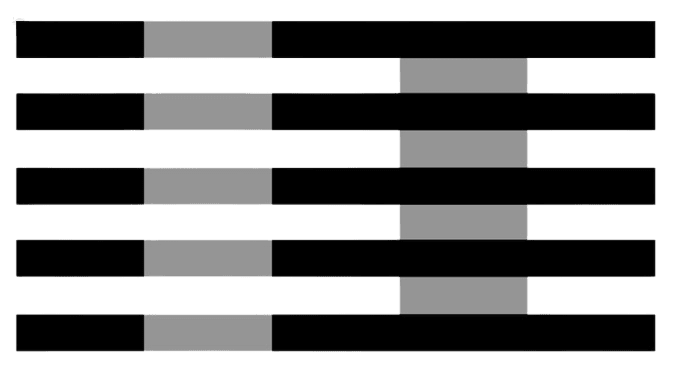
All the gray bars in this image are the same color & brightness.
They look different because your brain compares each one to the black and white stripes around it. Replace the background and you will realize it immediately.
All the gray bars in this image are the same color & brightness.
They look different because your brain compares each one to the black and white stripes around it. Replace the background and you will realize it immediately.
All the gray bars in this image are the same color & brightness.
They look different because your brain compares each one to the black and white stripes around it. Replace the background and you will realize it immediately.
All the gray bars in this image are the same color & brightness.
They look different because your brain compares each one to the black and white stripes around it. Replace the background and you will realize it immediately.
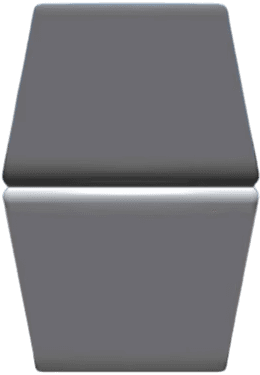
These two tiles are the same color & brightness.
Cover the middle line with your finger, and the illusion is revealed that the colors look the same.
They look different because the edge between them creates a contrast that makes one seem darker and the other lighter.
These two tiles are the same color & brightness.
Cover the middle line with your finger, and the illusion is revealed that the colors look the same.
They look different because the edge between them creates a contrast that makes one seem darker and the other lighter.
These two tiles are the same color & brightness.
Cover the middle line with your finger, and the illusion is revealed that the colors look the same.
They look different because the edge between them creates a contrast that makes one seem darker and the other lighter.
These two tiles are the same color & brightness.
Cover the middle line with your finger, and the illusion is revealed that the colors look the same.
They look different because the edge between them creates a contrast that makes one seem darker and the other lighter.
All the gray bars in this image are the same color & brightness.
They look different because your brain compares each one to the black and white stripes around it. Replace the background and you will realize it immediately.
These two tiles are the same color & brightness.
Cover the middle line with your finger, and the illusion is revealed that the colors look the same.
They look different because the edge between them creates a contrast that makes one seem darker and the other lighter.
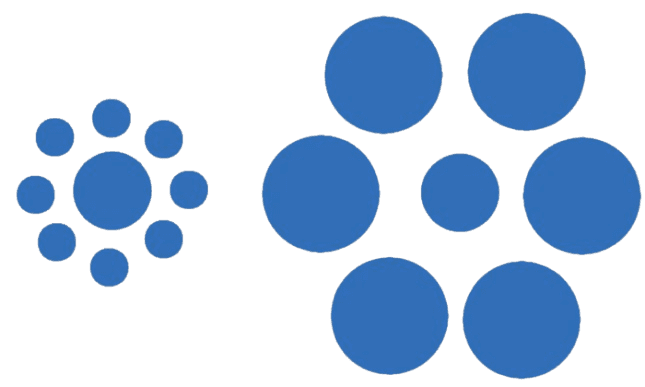
The two center circles are the same size.
They look different because the circles around them change how big the middle one appears by comparison.
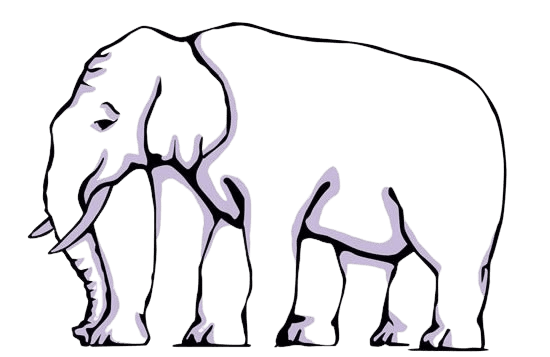
The legs look confusing or wrong because parts of them are missing or misplaced.
Your brain tries to complete the shape, but the spaces between the legs trick it into building an impossible elephant.
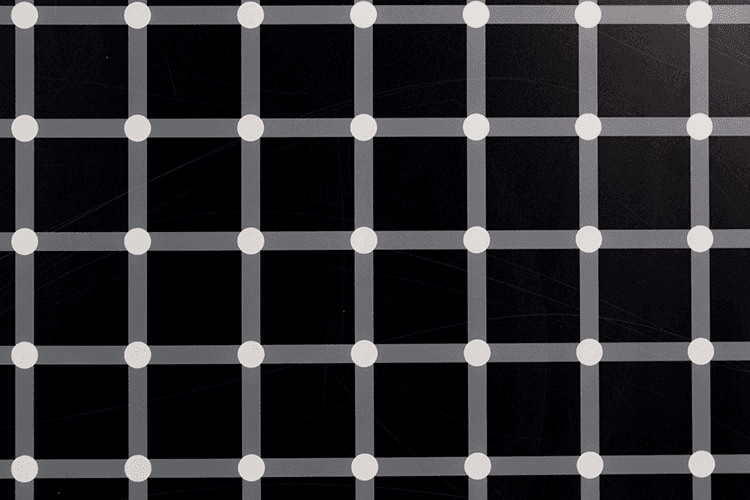
The gray dots seem to appear at the intersections, but they aren't really there.
Your visual system exaggerates contrast in the grid, creating dark spots where lines cross.
The gray dots seem to appear at the intersections, but they aren't really there.
Your visual system exaggerates contrast in the grid, creating dark spots where lines cross.
The gray dots seem to appear at the intersections, but they aren't really there.
Your visual system exaggerates contrast in the grid, creating dark spots where lines cross.
The gray dots seem to appear at the intersections, but they aren't really there.
Your visual system exaggerates contrast in the grid, creating dark spots where lines cross.
The legs look confusing or wrong because parts of them are missing or misplaced.
Your brain tries to complete the shape, but the spaces between the legs trick it into building an impossible elephant.
The legs look confusing or wrong because parts of them are missing or misplaced.
Your brain tries to complete the shape, but the spaces between the legs trick it into building an impossible elephant.
The legs look confusing or wrong because parts of them are missing or misplaced.
Your brain tries to complete the shape, but the spaces between the legs trick it into building an impossible elephant.
The two center circles are the same size.
They look different because the circles
around them change how big the
middle one appears by comparison.
The two center circles are the same size.
They look different because the circles
around them change how big the
middle one appears by comparison.
The two center circles are the same size.
They look different because the circles
around them change how big the
middle one appears by comparison.
The gray dots seem to appear at the intersections, but they aren't really there.
Your visual system exaggerates contrast in the grid, creating dark spots where lines cross.
The legs look confusing or wrong because parts of them are missing or misplaced.
Your brain tries to complete the shape, but the spaces between the legs trick it into building an impossible elephant.
The two center circles are the same size.
They look different because the circles
around them change how big the
middle one appears by comparison.
Tracked Shipping
Tracked Shipping
Tracked Shipping
Tracked Shipping
Tracked Shipping
Tracked Shipping
2-Year Warranty
2-Year Warranty
2-Year Warranty
2-Year Warranty
2-Year Warranty
2-Year Warranty
24/7 Customer Support
24/7 Customer Support
24/7 Customer Support
24/7 Customer Support
24/7 Customer Support
24/7 Customer Support
About
We are on a mission to help people with color vision deficiency
navigate the world of color with confidence and independence.
Join The Waitlist!
About
About
About
About
We are on a mission to help people with color vision deficiency navigate the world of color with confidence and independence.
We are on a mission to help people with color vision deficiency navigate the world of color with confidence and independence.
We are on a mission to help people with color vision deficiency navigate the world of color with confidence and independence.
We are on a mission to help people with color vision deficiency navigate the world of color with confidence and independence.
Quick Links
Quick Links
Quick Links
Quick Links
Join The Waitlist!
Join The Waitlist!
Join The Waitlist!
Join The Waitlist!
About
We are on a mission to help people with color vision deficiency navigate the world of color with confidence and independence.
Join The Waitlist!

Powered by Stereyo
Powered by Stereyo
BiColoRo is a prototype developed by Robbie, founder of Stereyo, an innovation studio known for creating high-end visual systems for cinema, LED-screens, simulators, and the world’s biggest live shows.
His deep expertise in perception and display technology shaped every part of this project.
BiColoRo is a prototype developed by Robbie, founder of Stereyo, an innovation studio known for creating high-end visual systems for cinema, LED-screens, simulators, and the world’s biggest live shows.
His deep expertise in perception and display technology shaped every part of this project.
Powered by Stereyo
BiColoRo is a prototype developed by Robbie, founder of Stereyo, an innovation studio known for creating high-end visual systems for cinema, LED-screens, simulators, and the world’s biggest live shows.
His deep expertise in perception and display technology shaped every part of this project.
Want to know more?
Powered by Stereyo
Powered by Stereyo
BiColoRo is a prototype developed by Robbie, founder of Stereyo, an innovation studio known for creating high-end visual systems for cinema, LED-screens, simulators, and the world’s biggest live shows.
His deep expertise in perception and display technology shaped every part of this project.
BiColoRo is a prototype developed by Robbie, founder of Stereyo, an innovation studio known for creating high-end visual systems for cinema, LED-screens, simulators, and the world’s biggest live shows.
His deep expertise in perception and display technology shaped every part of this project.
BiColoRo is a prototype developed by Robbie, founder of Stereyo, an innovation studio known for creating high-end visual systems for cinema, LED-screens, simulators, and the world’s biggest live shows.
His deep expertise in perception and display technology shaped every part of this project.